

STEEL

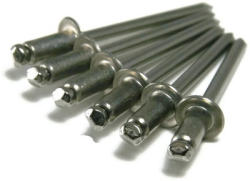
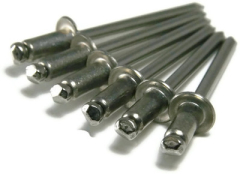
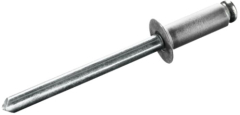
Steel blind rivets (or steel pop rivets) are designed for heavy-duty applications where maximum shear and tensile strength are required.

While stronger than aluminium, they are more difficult to install and require more robust tools. 

Carbon Steel vs. Stainless Steel

There are two primary types of "steel" rivets, each suited for different environments: 

  • Carbon Steel (Zinc-Plated):
    • Strength: High tensile and shear strength, suitable for structural automotive or construction work.
    • Corrosion: Typically come with a zinc coating for some protection, but will eventually rust if exposed to moisture over long periods.
    • Cost: Generally the most cost-effective option for high-strength requirements.
  • Stainless Steel (A2/304 or A4/316):
    • Strength: Offers the highest overall strength values among blind rivets.
    • Corrosion: Highly resistant to rust and chemical exposure, making them the standard for marine, food-grade, or outdoor applications.
    • Installation: Very hard material; standard hand tools may struggle or break. Pneumatic or heavy-duty long-arm riveters are highly recommended. 

Performance Comparison

Steel rivets significantly outperform aluminium in load-bearing capacity. 

Rivet Material 

Shear Strength (Approx. 4.8mm)

Tensile Strength (Approx. 4.8mm)

Best Use

Aluminium / Steel

~1,500 N

~2,300 N

General DIY / Light Metal

Steel / Steel

~2,400 N

~3,200 N

Structural / Automotive

Stainless / Stainless

Highest

Highest

Marine / Industrial

STEEL

Price Unavailable

Price Unavailable